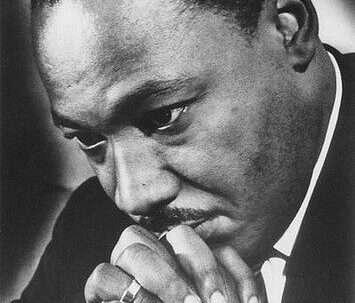
“Martin Luther King Jr.’s “Letter from Birmingham Jail,” written in April 1963, stands as one of the most important moral documents of the 20th century. It is not merely a defense of a specific protest, but a foundational treatise on the relationship between law, morality, and the necessity of direct action in the face of systemic injustice.
King wrote the letter on the margins of newspapers and scraps of paper while incarcerated for parading without a permit. The immediate catalyst was a public statement issued by eight white Alabama clergymen, who labeled the Birmingham protests “unwise and untimely.” They urged the Black community to pursue their cause in the courts rather than the streets. King’s response is a masterful exercise in Socratic dialogue and rhetorical precision, designed to dismantle their call for “patience.”
King begins by addressing the charge that he is an “outsider” coming into Birmingham. His rebuttal is rooted in a profound theological and sociological truth:
“Injustice anywhere is a threat to justice everywhere. We are caught in an inescapable network of mutuality, tied in a single garment of destiny.”
By framing the struggle for civil rights as a universal moral concern rather than a regional dispute, King shifts the burden of proof. He argues that no American can be considered an outsider within the country’s bounds when human rights are being violated.
To counter the claim that the protests were ill-advised, King outlines the rigorous process his organization followed:
- Collection of facts to determine whether injustices exist.
- Negotiation with political and economic leaders.
- Self-purification (workshops on nonviolence and the ability to accept blows without retaliating).
- Direct action.
King demonstrates that the movement did not seek to bypass negotiation; rather, it used direct action to create a crisis that would force negotiation. He famously notes that “tension” is a necessary catalyst for growth, much like Socrates felt it was necessary to create tension in the mind to liberate individuals from the bondage of myths.
Perhaps the most intellectually rigorous section of the letter is King’s distinction between two types of laws. Drawing on St. Augustine and St. Thomas Aquinas, he provides a framework for civil disobedience:
- Just Law: A man-made code that squares with the moral law or the law of God. It uplifts human personality.
- Unjust Law: A code that is out of harmony with the moral law. It degrades human personality.
King argues that a law is unjust if a power majority compels a minority to obey it but does not make it binding on itself. Conversely, a just law is a code that a majority compels a minority to follow and is willing to follow itself. This logic provides the moral justification for breaking segregation laws: one has a legal responsibility to obey just laws, but a moral responsibility to disobey unjust laws.
King expresses a “profound regret” that is perhaps the most stinging part of the letter. He argues that the greatest stumbling block to Black freedom is not the KKK member, but the white moderate who is more devoted to “order” than to “justice.”
He critiques those who say, “I agree with you in the goal you seek, but I cannot agree with your methods of direct action.” To King, this “shallow understanding from people of good will” is more frustrating than absolute misunderstanding from people of ill will. It exposes a preference for a “negative peace” (the absence of tension) over a “positive peace” (the presence of justice).
When the clergymen labeled King an “extremist,” he initially felt disappointed. However, he quickly pivoted to embrace the term, aligning himself with historical figures:
- Amos: An extremist for justice.
- Paul: An extremist for the Christian Gospel.
- Martin Luther: An extremist for the Reformation.
- Abraham Lincoln: An extremist for freedom.
He then turns his gaze toward the contemporary church, expressing disappointment in its leadership. He warns that if the church does not recapture the “sacrificial spirit” of the early Christian community—which was once a “disturber of the peace” rather than a mere “thermometer” that recorded the ideas of popular opinion—it will lose its authenticity and become an irrelevant social club.
King concludes by weaving the struggle of the Black American into the larger tapestry of American history. He asserts that “the goal of America is freedom,” and that the heritage of the nation and the eternal will of God are embodied in the echoing demands of the movement.
“Letter from Birmingham Jail” remains a timeless reminder that patience in the face of injustice is not a virtue, but a form of complicity. It transformed the Birmingham jail cell into a pulpit, speaking truth to power with a blend of intellectual rigor and prophetic fire.”
Comments are closed