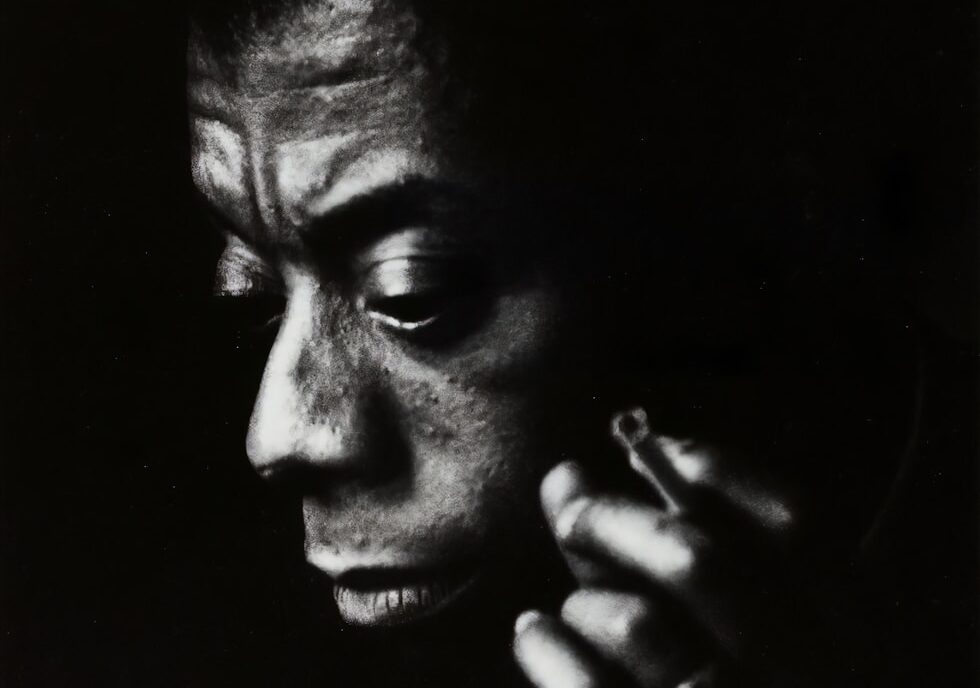
On the evening of February 18, 1965, the Cambridge Union Society hosted a debate that would echo through the decades as one of the most profound intellectual collisions in modern Western history. The motion before the house was stark and unforgiving: “The American Dream is at the expense of the American Negro.” Arguing in the affirmative was James Baldwin, the preeminent Black American novelist, essayist, and moral conscience of the Civil Rights Movement. Arguing in the negative was William F. Buckley Jr., the patrician architect of modern American conservatism and founder of National Review.
This clash was not merely a rhetorical exercise; it was a distillation of the central ideological and moral conflict of the United States. It pitted the lived, visceral reality of Black subjugation against the abstract, institutional apologetics of white American privilege. By the end of the evening, Baldwin would win the debate by a landslide vote of 544 to 164. However, Baldwin’s triumph was not just a victory of superior oratory. It was a victory of undeniable historical truth. In analyzing the arguments, rhetoric, and philosophical underpinnings of both men, it becomes irrevocably clear that Baldwin was right: the American Dream—its economic foundation, its psychological architecture, and its mythology of innocence—has always been predicated on the exploitation and systemic exclusion of Black Americans. To side with Baldwin is to side with empirical reality over comfortable mythology.
Contextualizing the Clash
To understand the weight of this debate, one must understand the precipice on which America stood in early 1965. The Civil Rights Act had passed the previous year, but the blood of activists was still fresh in the Southern soil. The Voting Rights Act was yet to be realized, and just days after this debate, Malcolm X would be assassinated in New York. The nation was burning with the friction between the demand for fundamental human rights and the violent entrenchment of white supremacy.
In this context, the two debaters represented diametrically opposed epistemologies. Baldwin, born into poverty in Harlem, carried the trauma, the resilience, and the prophetic vision of the marginalized. His knowledge was born of flesh and blood, of police batons, of segregated schools, and of an acute awareness of America’s hypocrisies. Buckley, born into immense wealth, educated at Yale, and insulated by every mechanism of white American privilege, represented the American establishment. Buckley’s worldview was theoretical, legalistic, and deeply invested in preserving the hierarchy that had so handsomely rewarded him and his ancestors.
The setting itself—the hallowed, elite halls of Cambridge University in England—added a layer of surrealism to the event. The overwhelmingly white, aristocratic British student body sat in judgment of the American soul. Into this space, Baldwin brought a fire that transcended mere political argument; he brought a moral reckoning.
Baldwin’s Argument: The Epistemology of Lived Experience
Baldwin’s opening address remains a masterclass in rhetorical strategy and profound philosophical insight. He did not begin with statistics or policy proposals; he began with the psychological and emotional reality of being Black in America. He famously articulated the ontological shock of the Black American experience: “It comes as a great shock around the age of five, or six, or seven, to discover that the country to which you have pledged allegiance, along with everybody else, has not evolved any place for you.”
This was the crux of Baldwin’s affirmative stance: the American Dream is not a neutral concept that Black Americans have simply failed to access; rather, it is an exclusive construct defined by their very exclusion from it. Baldwin argued that the identity of the white American is intrinsically tied to his superiority over the Black American. “If I am not the nigger,” Baldwin challenged, “and if it’s true that your invention reveals you, then who is the nigger?”
Baldwin seamlessly wove the psychological devastation of racism into the brutal economic realities of American history. He systematically dismantled the myth of the self-made American Republic. The American Dream—represented by its soaring wealth, its infrastructure, its global economic dominance—was not merely built despite the Negro, but upon his back. “I picked the cotton, and I carried it to market, and I built the railroads under someone else’s whip, for nothing. For nothing,” Baldwin declared.
Here, Baldwin establishes an irrefutable historical ledger. The wealth of the Southern planter class, which fueled the Northern industrial revolution, which in turn established American economic hegemony, was extracted from centuries of unpaid, forced Black labor. The American Dream of prosperity, property ownership, and upward mobility was financed by chattel slavery. When Baldwin argued that the Dream was “at the expense” of the Negro, he meant it in the most literal, economic sense. To deny this is to deny the basic mathematical and historical genesis of the American economy.
Furthermore, Baldwin exposed the moral decay that this system inflicts upon white Americans. He argued that to maintain the subjugation of Black people, white Americans have had to sever themselves from reality, resulting in a profound moral apathy. The “expense” of the American Dream, therefore, is not only the physical and economic destruction of the Black American, but the moral and spiritual destruction of the white American who must constantly lie to himself to maintain his “innocence.”
Buckley’s Counter-Argument: The Architecture of Evasion
William F. Buckley Jr. approached the lectern with the daunting task of defending an inherently indefensible status quo. His strategy relied on a combination of aristocratic charm, obfuscation, fear-mongering, and a deliberate misreading of both history and Baldwin’s intentions.
Buckley’s primary argument rested on a strict, legalistic interpretation of the American system. He conceded that terrible things had been done to Black Americans, but he attempted to divorce those historical realities from the “ideals” of the American Dream. He argued that the American system of government, with its Constitution and its democratic mechanisms, was the greatest engine for human freedom ever devised. In Buckley’s view, the failure of Black Americans to fully assimilate into the American Dream was not the fault of the Dream itself, but rather a temporary failure of the system’s execution, combined with the supposed cultural deficiencies of Black Americans themselves.
Buckley deployed the classic conservative “bootstrap” argument. He suggested that if Black Americans simply worked harder, acquired more education, and stopped complaining about the system, they would achieve equality. He pointed to the “machinery of American justice” as the only valid avenue for redress.
More perniciously, Buckley resorted to paternalism and subtle racial hostility. He warned the Cambridge audience against the “radicalism” of the Civil Rights movement, suggesting that Baldwin and his contemporaries were not seeking equality, but rather the destruction of Western civilization. He characterized Black Americans as lacking the civilizational advancement necessary to immediately participate in the fullness of American democracy, famously suggesting in his broader writings that the white South was entitled to impose its will because it was the “advanced race.”
Buckley attempted to reduce Baldwin’s existential cry to mere grievance politics. He accused Baldwin of speaking in threats, of abandoning the “ideals” of America, and of failing to appreciate the progress that had been made. Buckley’s rhetoric was polished, his vocabulary was elite, and his transatlantic drawl was designed to project intellectual superiority. But beneath the veneer of polysyllabic erudition was a hollow and cruel defense of white hegemony.
Siding with Baldwin: The Failure of Conservative Apologetics
When one analyzes the arguments side-by-side, siding with Baldwin is not merely a matter of contemporary political correctness; it is a necessity born of objective historical analysis and moral reasoning. Buckley’s arguments fail on almost every conceivable metric—empirically, historically, and philosophically.
First, Buckley’s reliance on the “ideals” of the American system ignores the fact that those ideals were deliberately constructed to exclude Black people. The Constitution that Buckley so revered originally codified enslaved Black people as three-fifths of a human being. The “machinery of justice” that Buckley told Black Americans to rely on was the exact same machinery that enforced Jim Crow segregation, that looked the other way during thousands of lynchings, and that actively disenfranchised Black voters. Buckley demanded that Black Americans play by the rules of a game where the rules were explicitly written to ensure they would lose.
Second, Buckley’s bootstrap argument is historically blind. It demands that a population systemically deprived of wealth, property, education, and legal protection for three centuries suddenly compete on an equal footing with those who have inherited the spoils of that deprivation. Baldwin’s assertion that the American economy was built on Black labor perfectly counters Buckley’s meritocratic myth. You cannot steal the labor of a people for 250 years, subject them to a century of apartheid, and then claim that their subsequent poverty is a result of their own lack of effort. Buckley’s argument requires a willful amnesia regarding how American wealth was actually generated and distributed.
Third, Buckley’s fear-mongering regarding the Civil Rights movement reveals the fundamental anxiety of white supremacy. By framing the demand for equal rights as a threat to “Western civilization,” Buckley inadvertently admitted Baldwin’s premise: that the current iteration of Western civilization (and the American Dream) was entirely dependent on Black subjugation. If granting Black Americans full humanity destroys your civilization, then your civilization is nothing more than a system of racial tyranny.
Baldwin’s superiority in this debate stems from his refusal to accept Buckley’s abstract, theoretical framing. Buckley wanted to debate the idea of America; Baldwin demanded they debate the reality of America. Baldwin anchored his arguments in undeniable physical truths: the existence of Harlem ghettos, the sharecropping systems of the South, the psychological trauma of the Black child. Buckley had no answer for these realities other than to dismiss them as unfortunate anomalies in an otherwise perfect system.
Furthermore, Baldwin possessed a magnanimity that Buckley entirely lacked. Despite the profound injustices he eloquently detailed, Baldwin did not argue for the destruction of America, but for its redemption. He argued that the liberation of the Black American was the absolute prerequisite for the liberation of the white American. “I am not a ward of America; I am not an object of pity,” Baldwin stated. “I am one of the people who built the country.” Baldwin was demanding inclusion in the Dream he helped create, while simultaneously demanding that the Dream be purged of its exclusionary poison.
Buckley, conversely, was fighting purely for the preservation of his own power and the power of his class. His debate performance was a masterclass in the rhetoric of evasion—using high-minded philosophical language to justify the brutal, systemic oppression of his fellow citizens. In retrospect, Buckley’s arguments appear not as principled conservatism, but as the sophisticated rationalization of a deeply prejudiced man desperate to protect an unjust hierarchy.
The Enduring Legacy of the Debate
The 1965 Cambridge Union debate remains breathtakingly relevant today because the core tension it explored—the contradiction between American ideals and American racial reality—remains unresolved. The arguments presented by William F. Buckley Jr. did not disappear; they simply evolved. The modern political rhetoric that attacks critical race theory, that denies the existence of systemic racism, that blames Black poverty on “culture” rather than historical expropriation, and that views the teaching of America’s racial history as a threat to national unity, is the direct ideological descendant of Buckley’s 1965 performance. It is the same attempt to maintain white “innocence” by denying the historical ledger.
Baldwin’s victory at Cambridge was a prophetic moment. He exposed the fact that the American Dream, as traditionally conceived and executed, is a zero-sum game heavily rigged by racial caste. He proved that one cannot celebrate the towering achievements of American capitalism and democracy without also accounting for the bodies buried in the foundation.
To side with James Baldwin in this debate is to accept the painful but necessary truth about the United States. It is to acknowledge that the nation’s immense prosperity was subsidized by the blood, sweat, and stolen generational wealth of Black Americans. Baldwin’s analysis was an act of profound intellectual courage, tearing away the mythological veil of the American Republic to reveal the racial subjugation operating at its core.
Ultimately, Baldwin won because reality was on his side. Buckley brought a polished defense of an illusion; Baldwin brought the undeniable, undeniable fire of the truth. As Baldwin famously noted elsewhere, “Not everything that is faced can be changed, but nothing can be changed until it is faced.” In 1965, on a stage in England, James Baldwin forced William F. Buckley Jr., and by extension the entire Western world, to face the American reflection. And the reflection proved, beyond a shadow of a doubt, that the American Dream had exacted a terrible, unforgivable expense from the American Negro.
Comments are closed